Events
Federal Climate Laws, Lawsuits, and State Opportunities: NCEL & MCLI Webinar Recap
December 16, 2025
Overview
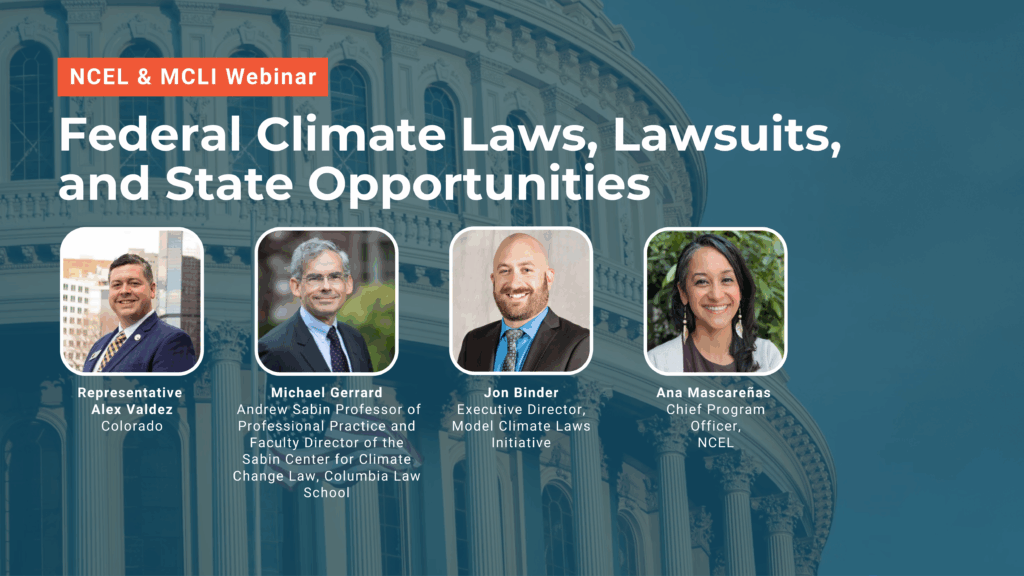
At a time when federal climate policy is shifting, state leadership is more important than ever. On December 16, 2025, NCEL hosted a webinar in partnership with the Model Climate Laws Initiative (MCLI) to discuss the current landscape of federal climate laws, including the status of federal lawsuits against states, and how states can continue leading on climate policies in 2026.
- Why State Climate Action Matters: Despite federal challenges to state climate laws, states retain significant, and in some areas exclusive, authority to act. While areas like natural gas pipeline siting and wholesale electricity rates are federally preempted, states can still lead on solutions for air and water pollution, energy supply, and local siting decisions. States are already advancing strong climate solutions across the transportation, power, and building sectors, demonstrating how much authority they still hold to drive climate progress. Many of these policies also function as affordability solutions, designed to cut energy use, lower household costs, and accelerate the transition to cleaner, more reliable energy.
Panelists
- Representative Alex Valdez, Colorado
- Michael Gerrard, Andrew Sabin Professor of Professional Practice and Faculty Director of the Sabin Center for Climate Change Law, Columbia Law School
- Jon Binder, Executive Director, Model Climate Laws Initiative
- Moderator: Ana Mascareñas, National Caucus of Environmental Legislators
Litigation Shaping the Future of State Climate Policy
Federal legal challenges are increasingly shaping the landscape for state climate action, and the webinar offered a clear snapshot of the most significant cases to watch. Speakers outlined active federal lawsuits targeting state policies — including challenges to climate superfund laws in Vermont and New York and Hawaii’s cruise‑ship environmental tax. The webinar also highlighted a growing set of contested areas and pending litigation, including state tort and deception cases against fossil fuel companies, gas taxes and fees, and building codes that restrict natural gas.
The active cases and pending litigation will influence how far states can go in the years ahead, and speakers emphasized the importance of states anticipating federal litigation and planning for the implementation of state policies.
Understanding State Authority in a Shifting Federal Landscape
The webinar walked through how states retain broad authority to act on climate even as federal agencies attempt to roll back key protections. Federal law preempts areas like vehicle emissions and fuel economy standards, natural gas pipeline siting, wholesale electricity rates, and national standards for hazardous materials transport. However, states can still adopt stronger policies across air and water pollution, renewable energy standards, and coal mining regulation. States also hold exclusive control over decisions such as power plant siting, electric transmission and distribution lines, retail energy rates, and (subject to certain federal permits where applicable) onshore wind and solar siting on non-federal land.
Climate Policy as an Affordability and Revenue Strategy
Climate and clean energy policy is emerging as a powerful affordability tool. The webinar covered how “polluter‑pay” approaches — such as climate superfunds and cap‑and‑invest programs — can generate substantial revenue for programs that directly benefit households. Speakers emphasized that these state-based climate accountability mechanisms not only hold emitters accountable but also create long‑term energy savings that ease costs for consumers.
Policy Opportunities by Sector
Even with federal rollbacks, states have concrete opportunities to lead across major sectors. The webinar highlighted some of the primary opportunities for states, including:
- Transportation Sector: Statewide Low Carbon Fuel Standards, rebates for EVs and charging infrastructure, and addressing freight emissions through Indirect Source Rules. Learn more.
- Power Sector: Renewable Portfolio/Clean Energy Standards, streamlining permitting for renewable energy, and establishing or joining cap-and-invest programs like the Regional Greenhouse Gas Initiative (RGGI). Learn more.
- Building Sector: State tax credits for heat pumps, building performance standards, and requiring new buildings to be all-electric. Learn more.
- Other: Polluter-pay mechanisms for revenue generation, utility rate classes for high-demand users like data centers to protect ratepayers, and policies to encourage climate resilience and insurance premium discounts for mitigation efforts.
Resources
You can see the full list of topics in the webinar presentation slides available here.
The following NCEL and MCLI resources are available to provide more information on the topics covered during the webinar:
- NCEL: Transportation Briefing Book
- NCEL: Data Center Issue Brief
- NCEL: Transmission Briefing Book
- MCLI: Model Laws
Please reach out to Ava Gallo, NCEL Climate & Energy Program Manager, with any questions.