Blog
Despite Federal Challenges to Public Lands, There is Room for Progress at the State Level
December 10, 2025
Overview
Federal attempts to roll back protections for public lands have been accelerating in recent months. Yet across the country, support for public lands remains strong. State and local leaders are also stepping up with legislative solutions to safeguard access and maintain ecological integrity. This blog explores how states are addressing federal challenges and charting a path forward for public lands conservation.
- Why Public Land Protections Matter: Public lands protect ecosystems and critical habitats for thousands of species, safeguard important historical and cultural sites, mitigate climate change, provide spaces for outdoor recreation, and support local economies. According to a 2024 report, American public lands are responsible for generating $45 billion in economic output and nearly 400,000 jobs in surrounding communities.
Catch Up Quick: Mounting Federal Challenges to Public Lands
Despite their enormous popularity and range of benefits, public land protections are facing rollbacks from both Congress and the current administration.
Expanding Extraction, Rolling Back Protections
The Bureau of Land Management and Congress are expanding oil and gas drilling and logging on millions of acres of public lands, laying off career staff at land management agencies, and rolling back protections for treasured American lands. The administration also announced the rollback of the popular Roadless Rule, opening 58 million acres of national forests to logging, and moved to rescind the Public Lands Rule, which put conservation and outdoor access on equal footing with more extractive uses of public lands.
HR 1
Earlier this summer, after extensive public opposition from across the political spectrum, a proposal to sell off millions of acres of public lands was removed from HR 1, but the newly signed law still significantly expands coal mining, logging, and oil and gas drilling on public lands. Congressional members also continue to defund land management agencies and challenge bedrock environmental laws like the Antiquities Act and Endangered Species Act.
Support for Public Lands Remains Strong
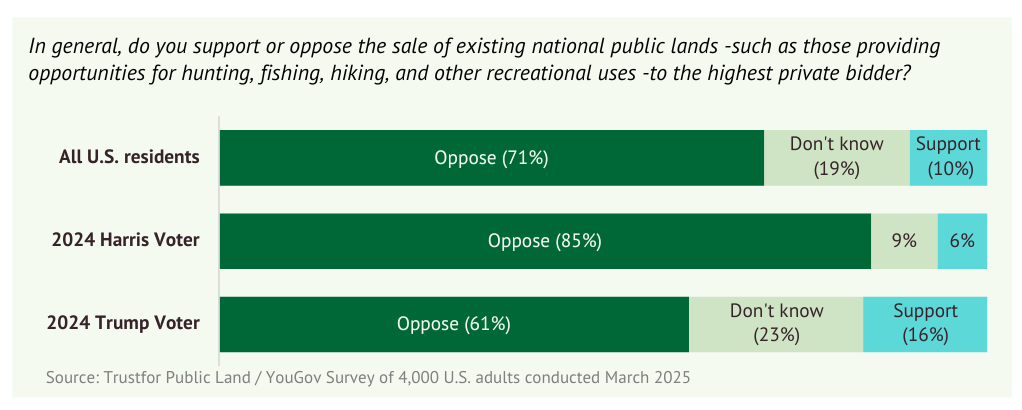
In spite of these recent developments, state leaders can still make a difference in protecting our public lands. Many state legislatures have already shown their commitment to keeping public lands public, and the general public is on their side:
- A Call for Protection: A 2025 poll found that 71% of U.S. residents oppose the sale of existing national public lands, while 74% oppose the closure of public lands.
- Concern About Loss of Natural Areas: Four in five Western voters cited concerns about the loss of natural areas.
- Support for National Monument Status: Nearly nine in ten Western voters said they support keeping recent national monument designations for public lands.
State legislators can remain committed to protecting public lands and responding to federal challenges by increasing protections for and access to public lands. Examples of recent local and statewide actions can be found below.
Opposition to Public Lands Sell-Off
By and large, state and local officials have responded to attempts to sell off public lands with pushback. The limited number of sell-off attempts introduced in state legislatures have not passed, while many counties, cities, and towns have passed resolutions or released letters in support of keeping public lands in public hands.
- State-Wide Sell-Off Attempts are Unpopular: In several Western states, lawmakers have introduced resolutions in support of land sell-offs or “transfers” to state or private control. Many of these resolutions claim that federally owned land is an unconstitutional use of power that infringes on states’ rights and authority — a claim that is widely opposed by the general public.
- Local Municipalities Have Passed Dozens of Letters and Resolutions In Opposition to Sell-Offs: While state legislators have voted down state-wide sell-off attempts, local officials have also passed dozens of resolutions and letters in opposition to sell-offs and in support of keeping public lands public. As of National Public Lands Day (September 27), at least 60 resolutions have been released across ten states this year.
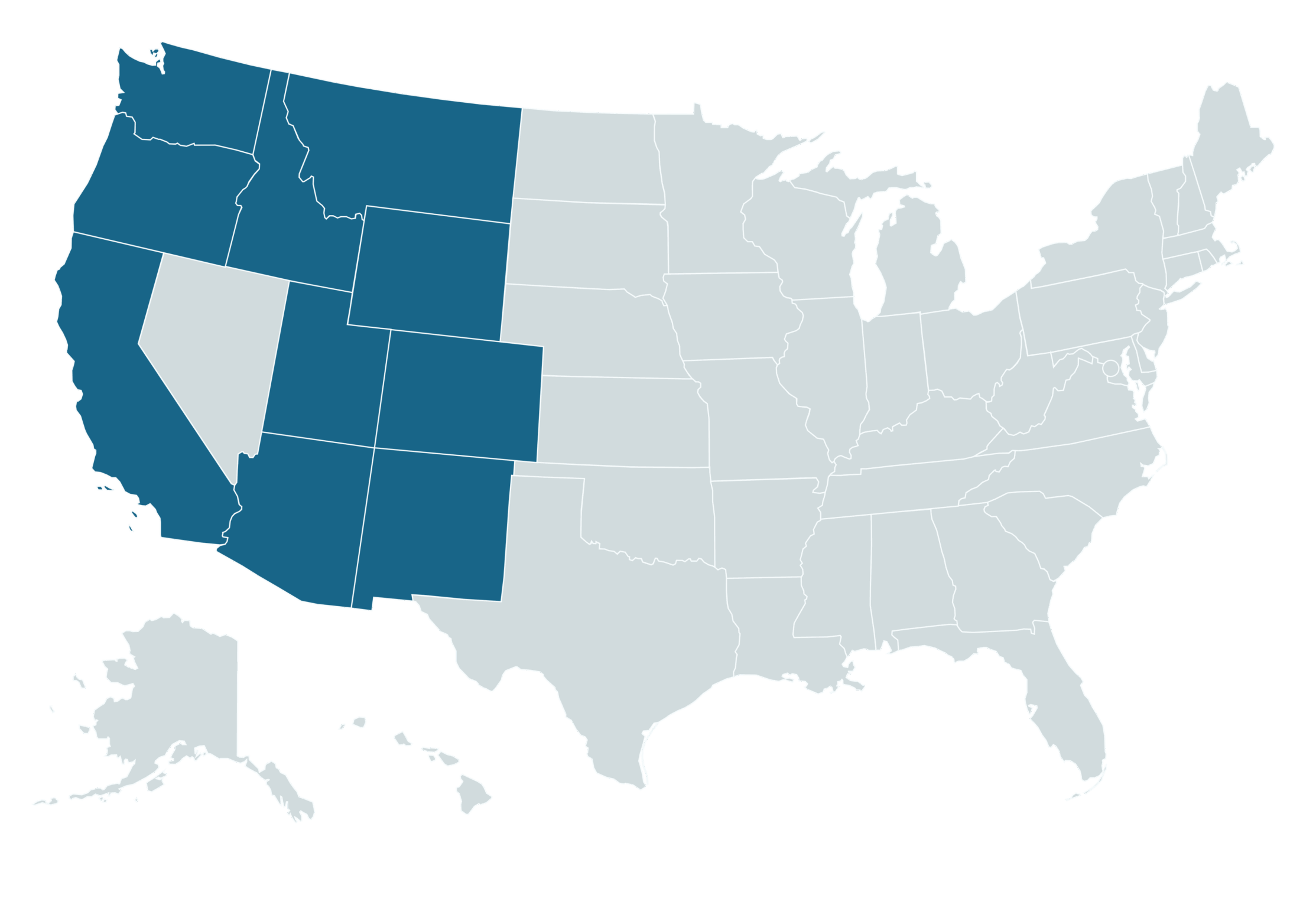
In many of these states, additional counties and municipalities are also preparing to pass public lands resolutions. A complete list of resolutions and letters, as well as their text, can be found on the Mountain Pact’s website.
View Local Anti-Sell-Off Efforts
- Arizona: Eight county-, city-, and town-wide resolutions and letters in Arizona, such as this Coconino County resolution that affirms support for continued federal management of public lands within the county, opposes any efforts to sell, transfer, or dispose of public lands, and opposes changes to the Antiquities Act or national monuments.
- California: Three anti-sell-off resolutions and letters in California, as well as State Assembly Joint Resolution 10, which formally requests that the Trump administration uphold commitments to forest management and wildfire risk reduction.
- Colorado: Over 35 resolutions and letters in Colorado. Most oppose public lands sell-off attempts. One in Pitkin County also rezones the county’s public lands to prevent their future development. The Colorado Senate also passed the bipartisan Senate Joint Resolution 25-009 titled “Protection of Colorado’s Public Lands,” which passed the Colorado Senate unanimously in March.
- Idaho: Blaine County anti-sell-off resolution.
- Montana: City of Missoula and Missoula County anti-sell-off and pro-public lands resolutions in Montana.
- New Mexico: Seven resolutions and letters in New Mexico, including Taos County and Santa Fe County pro-public lands resolutions, plus an executive order from Albuquerque Mayor Tim Keller reaffirming the City’s commitment to protecting public lands.
- Oregon: City of Bend anti-sell-off letter.
- Utah: Town of Alta and Summit County anti-sell-off resolutions and letters.
- Washington: Three town and county resolutions and letters, including a Jefferson County resolution.
- Wyoming: Park County and Teton County anti-sell-off resolutions and letters.
State Policy Solutions for Conservation Gaps & Protecting Public Lands
In addition to striking down attempts to sell off public lands and passing resolutions in opposition, state legislators have also affirmed their commitment to keeping lands ecologically intact and accessible to the public by passing conservation legislation. In dozens of states, bills have been introduced and enacted to increase access to public lands, strengthen habitat connectivity, fund further land and water conservation, and improve collaboration with Tribes.
- Learn More: See the 2025 Legislative Session Recap from the National Caucus of Environmental Legislators (NCEL) for more information on state policy trends in 2025.
1. Land Conservation and Restoration
Land conservation efforts are accelerating through state-based conservation goal implementation, major state investments, and large-scale restoration initiatives. One continued area of state engagement on land conservation is through 30×30 goals. Nine states continue to make progress on their 30×30 conservation goal implementation, marked by in-depth public engagement processes across the board.
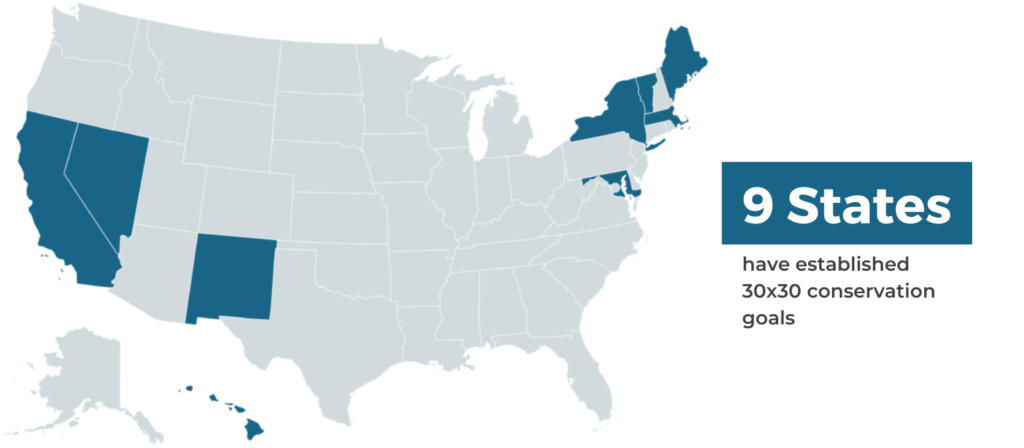
Other recent legislative examples related to land conservation and restoration can be found below.
View 2025 Land Conservation and Restoration Legislation
- Conservation Funding (Massachusetts): Massachusetts passed a $2.5 billion Governor requested capital spending bill in 2025 (S.2542), which earmarks $220.5 million towards land and water conservation, with specific goals to improve the integrity of and access to public lands.
- Public Lands for Recreation (Hawaii): Hawaii enacted H.B.1348 in 2025, which requires the Board of Land and Natural Resources to lease public land for recreation use via public lottery, with participation limited to residents of the county where the land is located.
- Designated Wild Areas (Indiana): Indiana introduced SB 321 in 2025, which would establish ‘designated wild areas’ as a new land classification for state-owned forested areas with over 800 contiguous acres that have natural forested character and offer opportunities for solitude and recreation. The bill would designate 13 such areas and establish management guidelines for the DNR.
2. Outdoor Access
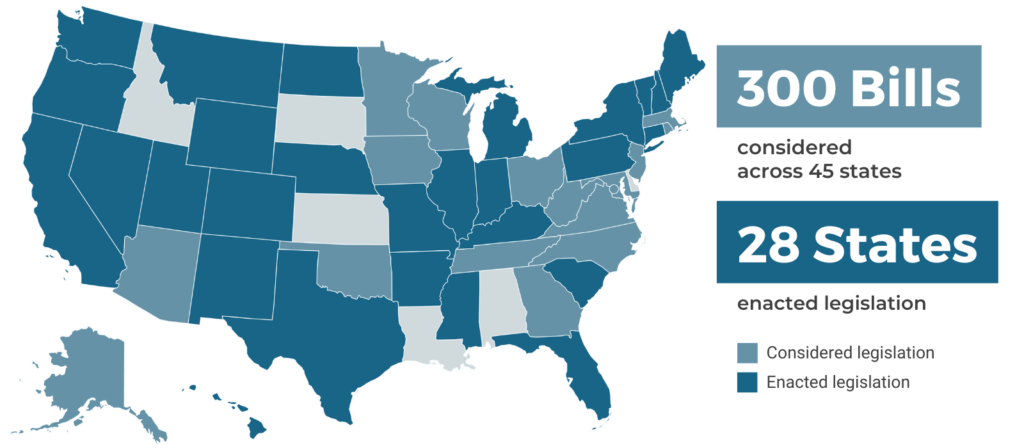
Expanding access to nature on public lands and beyond is a growing bipartisan priority, with hundreds of bills in 2025 to enhance outdoor recreation through a variety of means. Outdoor recreation contributes $1.2 trillion in economic output nationally, which largely originates in the quality and availability of public recreational lands. In 2025, at least 300 bills were introduced across 45 states to increase access to nature, on public lands in particular; 28 states enacted legislation. Specific legislative examples from 2025 can be found below.
View 2025 Outdoor Access Legislation
- Indiana HB 1616 (Enacted, 2025): Urged the development of a study on the economic value and impacts of public recreational lands.
- Nevada SB405 (Enacted, 2025): Created the Transit-to-Trails Task Force to improve public transit access to outdoor recreation areas.
- Florida HB 209 (Enacted, 2025): Prioritizes and defines conservation-based public outdoor recreation use in state parks to prevent the conversion of parks’ natural spaces into paved sport courts.
- Massachusetts SB 2571 (Introduced, 2025): Proposes a dedicated ‘nature for all fund’ for delivering nature-based solutions to climate change, biodiversity protection, and equitable access to nature.
- Texas H.B.4230 (Enacted, 2025): Establishes the Bicentennial Trail, a network of hike and bike trails connecting significant historic and cultural sites as well as existing trails to promote outdoor recreation, environmental stewardship, and the state’s historical and cultural heritage.
3. Habitat Connectivity
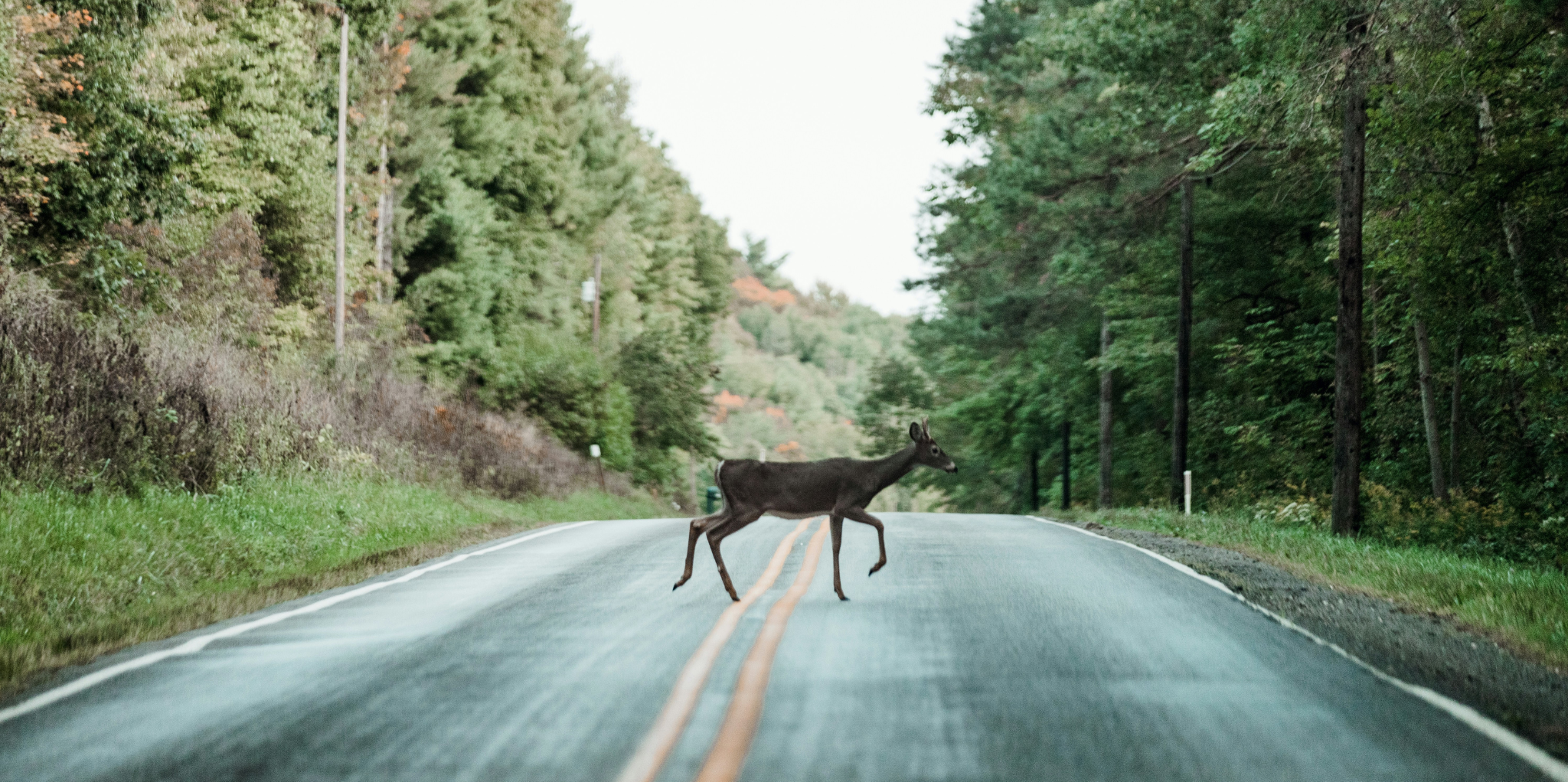
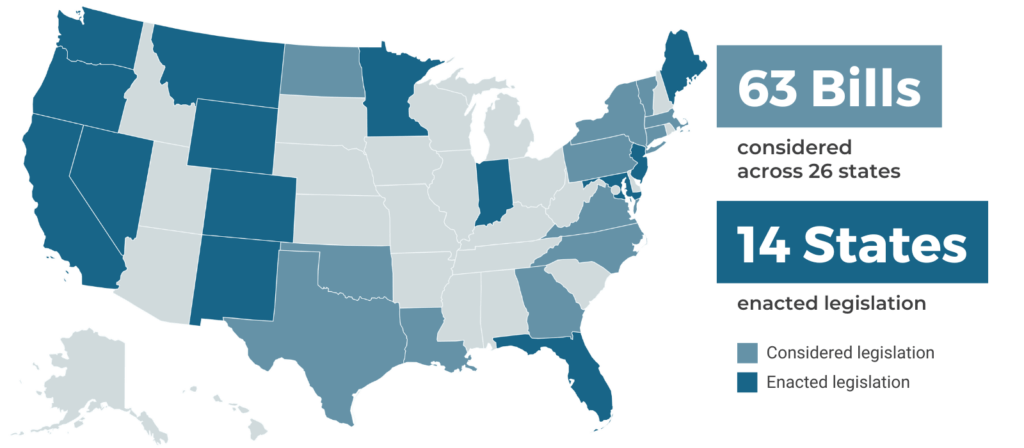
Conservation policies are increasingly focused on reconnecting wildlife habitats fragmented by roadways and other infrastructure, with states prioritizing wildlife corridors and habitat conservation funding. In 2025, at least 63 bills were introduced across 26 states to strengthen habitat connectivity and prioritize land conservation; 14 states enacted legislation. Specific legislative examples from 2025 can be found below.
View 2025 Habitat Connectivity Legislation
- New Mexico HB 2 (Enacted, 2025): Appropriated $50 million to the wildlife corridors fund in 2025 for the construction of wildlife crossing projects identified in the state wildlife corridor action plan.
- Montana HB 855 and HB 932 (Enacted, 2025): Created the big game and wildlife highway crossings and accommodations account in 2025 and allocated a portion of the state cannabis tax as a permanent funding source.
- Florida SR 1892 (Enacted, 2025): Affirms the importance of the Florida Wildlife Corridor, highlighting its environmental, cultural, economic, and tourism value, and designates April 22, 2025, as ‘Florida Wildlife Corridor Day’ to recognize its significance and ongoing conservation efforts.

4. State/Tribal Collaboration
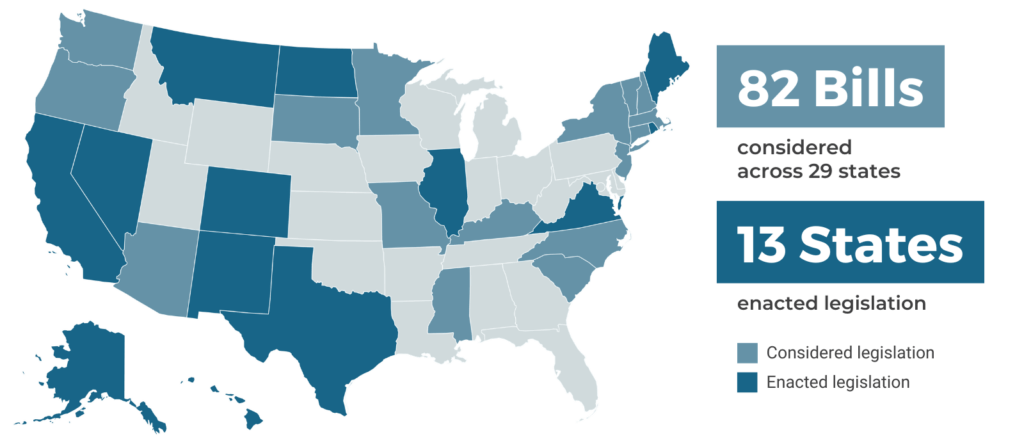
Collaborative conservation is deepening as states partner with Tribes to return lands, unlock federal funding, and expand land and water stewardship. In 2025, at least 82 bills were introduced across 29 states to strengthen state/Tribal collaboration; 13 states enacted legislation. Specific legislative examples from 2025 can be found below.
View 2025 State/Tribal Collaboration Legislation
- Colorado HB 25-1163 (Enacted, 2025): Guarantees the rights of enrolled members of the Southern Ute Indian Tribe and enrolled members of the Ute Mountain Ute Tribe to enter state parks without having to pay an entrance fee. Tribal nations often maintain treaty rights to freely access land and maintain significant historical and cultural ties to land, but entrance fees serve as a financial barrier for some Tribal citizens.
- Connecticut HB 5388 (Introduced, 2025): Establishes a commission to manage Tribal hunting and fishing rights, grants regulatory authority to certain Tribes, exempts Tribal members from state fees, and ensures protection from legal actions.
Looking Ahead
State legislatures can play a key role in addressing challenges to public lands protections and sustaining conservation efforts. Public land sell-offs are unpopular, and states have largely responded in tune with public opinion — opposing public land sell-offs and further advancing conservation efforts. In the first year of the current administration, local legislators have passed resolutions and letters in support of public lands, as well as bills that protect public lands and advance conservation. State legislators can continue to lead the way.
Learn more by exploring the issues NCEL works on or getting in touch with one of our team members.