Events
2025 Hawaii Clean Energy Policy Workshop Recap
December 8–11, 2025
Event Overview
From December 8–11, 2025, NCEL and the Blue Planet Foundation hosted a Clean Energy Policy Workshop for state legislators in Hawaii — the first state to pass a law committing to 100% clean energy. Now in its third year, the workshop convened a select cohort of legislators from six states who are committed to a renewable energy future. Over the course of four days, legislators experienced Hawaii’s clean energy progress firsthand while learning and collaborating on renewable energy goals for their own states.
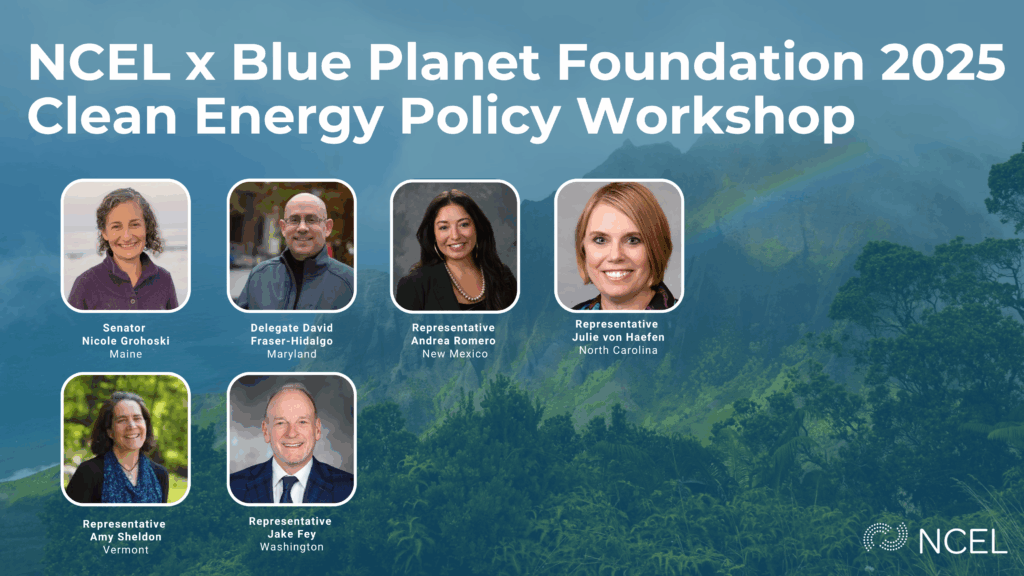
Legislator Cohort
- State Senator Nicole Grohoski (Maine)
- State Delegate David Fraser-Hidalgo (Maryland)
- State Representative Andrea Romero (New Mexico)
- State Representative Julie von Haefen (North Carolina)
- State Representative Amy Sheldon (Vermont)
- State Representative Jake Fey (Washington)
Day One: Setting the Scene
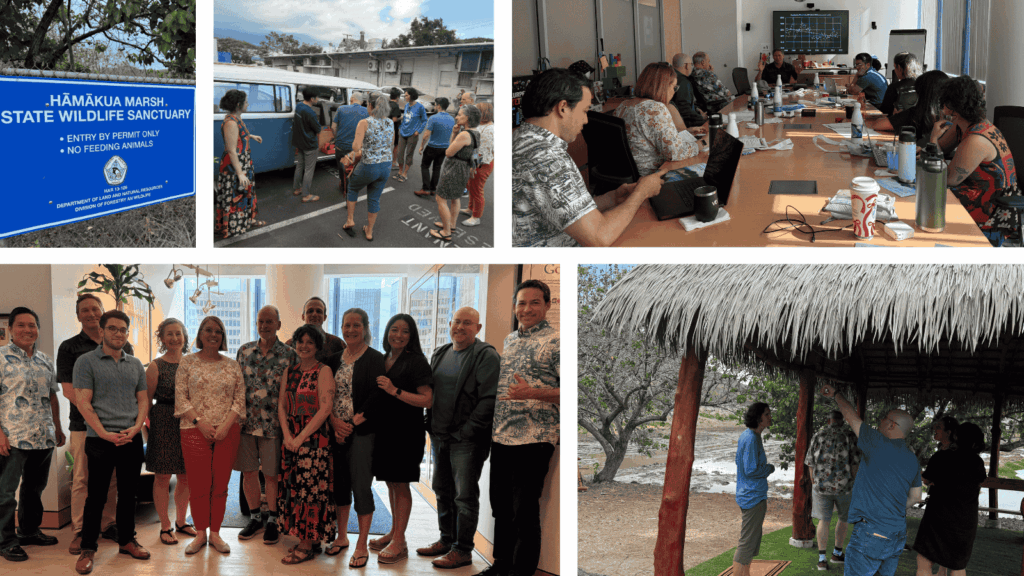
The workshop opened with presentations from leading renewable energy professionals in Hawaii, offering legislators a clear look at the state’s policy evolution and implementation. Presentations opened with Climate and Social Impact Strategist Jeff Mikuluna, who outlined Hawaii’s ongoing transition to 100% renewable energy. Attendees then took part in a discussion concerning the legal foundations for advancing clean energy policy, led by Richard Wallsgrove, Co‑Director of the Environmental Law Program at the University of Hawaii at Manoa, and Isaac Moriwake, Managing Attorney at Earthjustice. To round out the presentations, Brad Rockwell, COO of the Kauai Island Utility Cooperative, shared the utility’s experience transitioning to 100% renewable energy, giving legislators a firsthand look at implementation on the ground.
- Day One Concluding Activity: The day concluded with a trip to a community forestry project started by Hawaii State Representative Lisa Marten and the Department of Land and Natural Resources along the Hamakua Marsh.
Day Two: Seeing Clean Energy Across Sectors
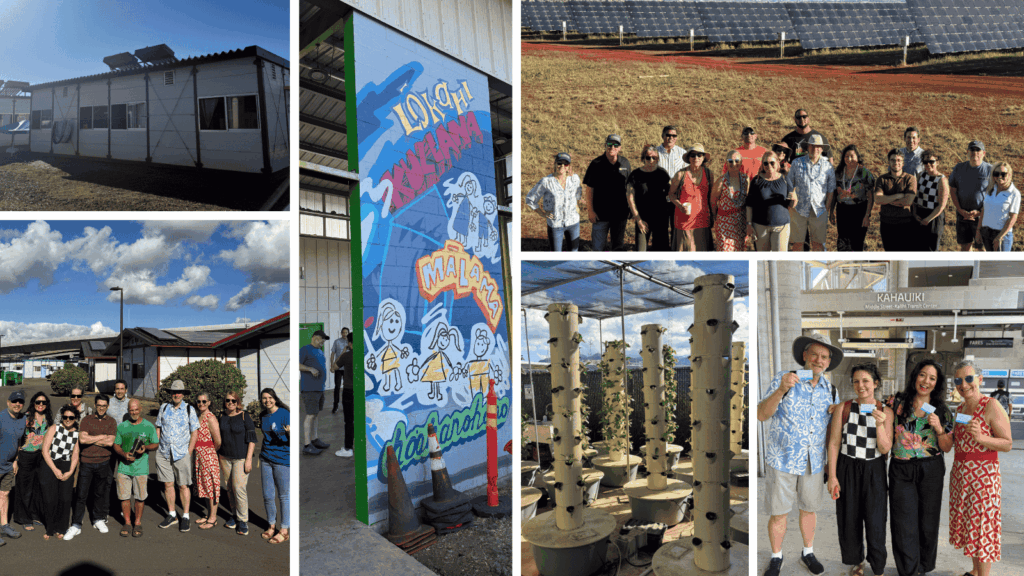
Day two centered on the clean energy systems in Hawaii that support resilient communities across housing, transportation, education, farming, and local businesses. The day began at Kahauiki Village, a permanent supportive housing community for formerly homeless households that operates its own micropower grid. Participants then took the Skyline Rail System to Leeward Community College, where Jon Nouchi, Deputy Director of Honolulu’s Department of Transportation Services, discussed countywide transportation upgrades and bus electrification.
At Leeward Community College, Chancellor Carlos G. Penaloza, PhD, outlined the campus sustainability plan, including its rooftop solar system and goal of reaching net‑zero by 2035. Participants then traveled to the Mililani Agricultural Park — home to one of Hawaii’s first utility-scale solar and battery storage power plants — where they learned about the park and its current agrivoltaic research project (i.e., the dual-use of lands for energy and food production).
- Day Two Concluding Activity: The day concluded with a presentation by Maui Brewing Company on their commitments to CO2 emissions reductions, including the introduction of solar thermal systems as well as solar arrays that provide 98% of their power needs.
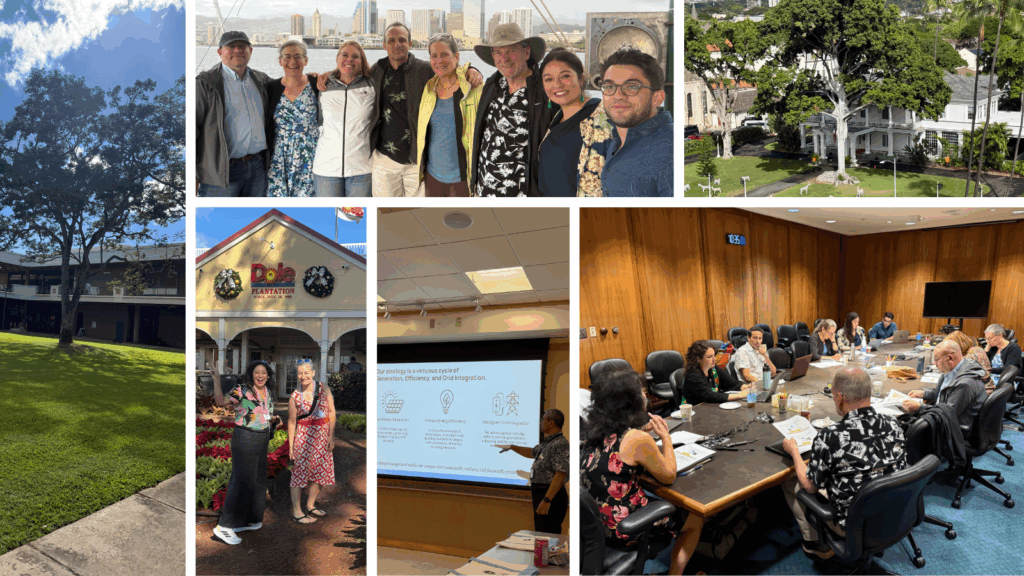
Day Three: Turning Lessons and Reflections Into Action
Day three focused on putting ideas into action. After a tour of the Hawaii State Capitol, the group reflected on the key lessons and ideas from the workshop that they planned to bring back to their home states. Each legislator presented their short‑ and long‑term climate priorities and opportunities for future collaboration.
Over lunch, Hawaii Public Utilities Commissioner Colin Yost outlined how the state regulates more than 1,300 utilities to ensure safe, reliable, and resilient service. Gwen Yamamoto‑Lau, Executive Director of the Hawaii Green Infrastructure Authority, followed with an overview of how they are stimulating private investment and leveraging innovative finance to support the state’s goal of 100% clean energy in the electricity sector by 2045.
- Day Three Concluding Activity: The trip concluded with a sunset cruise aboard the University of Hawaii’s Marine Vessel, the Kaunānā, where the group had the chance to learn about the university’s marine research work and reflect on the workshop.
Looking Ahead in 2026
State legislators who attended the NCEL and Blue Planet Foundation Hawaii Clean Energy Policy Workshop left with firsthand insight into effective clean energy implementation. Despite representing six states with diverse political contexts and climate goals, participants were able to learn from Hawaii’s successes and challenges — and from one another. Each returned home with concrete policy ideas for the 2026 session and beyond, and NCEL looks forward to continuing to provide these collaborative spaces that help clean energy solutions grow nationwide.
To learn more about clean energy solutions for your state, visit NCEL’s website to explore the issues we work on, or contact NCEL’s Climate and Energy team.