
Issue Brief
Data Centers Issue Brief
April 29, 2025
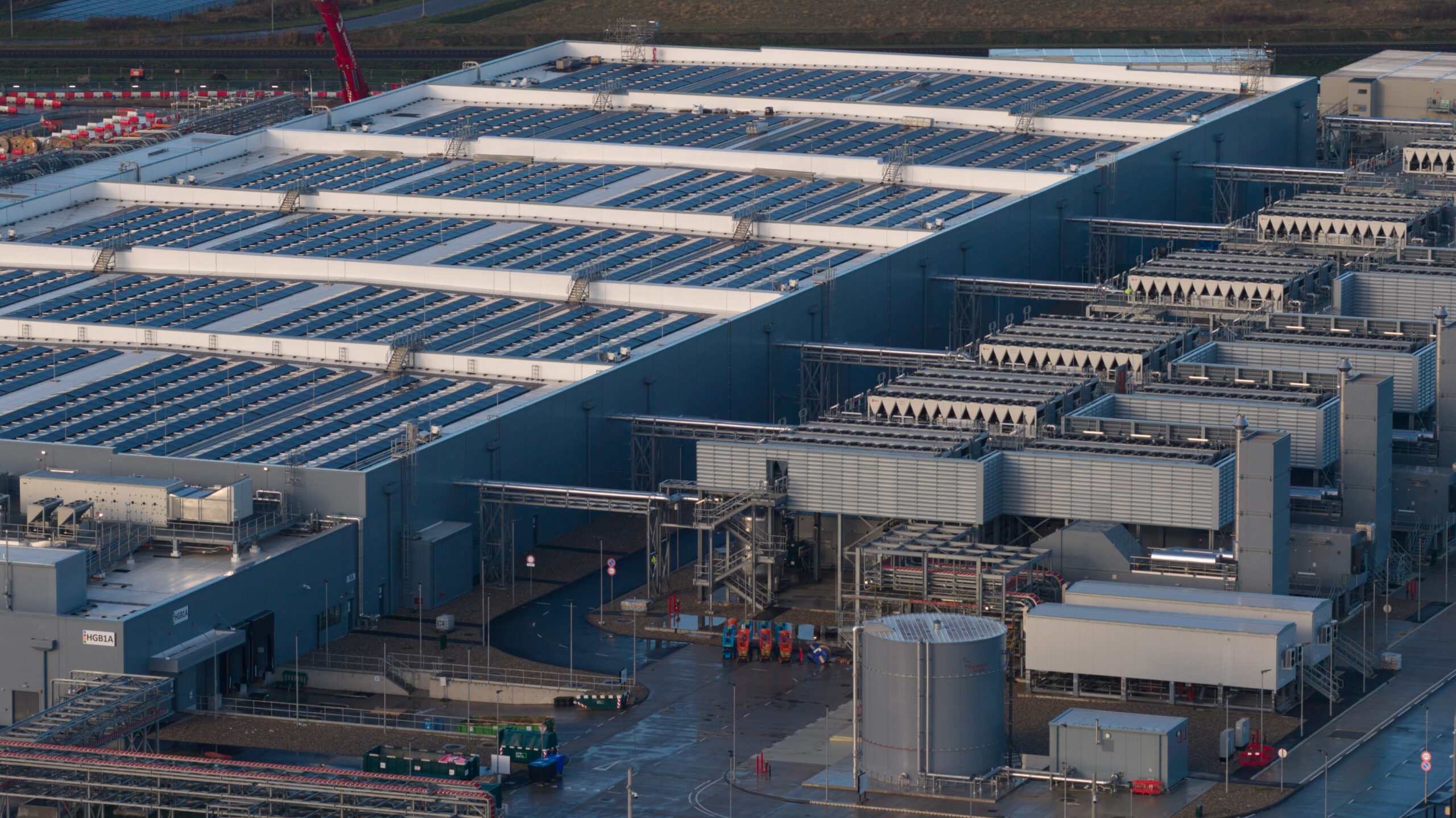
Data centers are being built across the U.S. at a rapid rate. These are facilities that house the equipment that processes and stores the data powering web services and artificial intelligence (AI). With their rapid spread and consumption of resources, data centers are driving up consumer electricity bills, straining grid reliability, impacting air quality, and consuming significant land and water resources (even with efficiency and reuse measures in place).
Data centers’ impacts on our electric grid are especially profound — a single AI data center can use as much electricity as 100,000 homes, and some high-capacity facilities (“hyperscalers”) currently in development are projected to use far more. To meet this unprecedented level of demand growth in such a short period, a massive amount of energy generation and grid infrastructure must be built, putting increased pressure on ratepayers and state climate goals.
State lawmakers can play a critical role in deciding how, when, where, and if data center development occurs in their state. By doing so, states can minimize the impact of data centers on climate change, the environment, energy affordability, and community well-being.
Energy demand is expected to increase by 24% in the U.S. over the next decade, with the majority of that growth driven by data center demand.
It’s estimated that data centers could increase electricity bills 8% nationwide, and up to 25% in some regions, such as the Mid-Atlantic.
Large data centers can consume between one and five million gallons of freshwater per day, equivalent to the water use of 10,000-50,000 people.